Request A Callback
Request A Callback
NEBOSH International General Certificate
In Occupational Health And Safety
NEBOSH International General Certificate In Occupational Health And Safety
The NEBOSH International General Certificate in Occupational Health & Safety training program is founded on the principles of implementing top-tier safety systems. Through this NEBOSH Certificate course, you will gain the expertise to effectively implement industry-leading standards for health and safety management across various sectors. Enrolling in this NEBOSH Certificate course will empower you to attain full qualification and competence as a health and safety officer.
Who can do this course?
Anyone who needs to understand the principles of health and safety as part of their job will benefit from taking this qualification including: – Team leaders and supervisors, – HR professionals, – Facilities managers – Those training young people in a working environment.

WHY NEBOSH IGC?
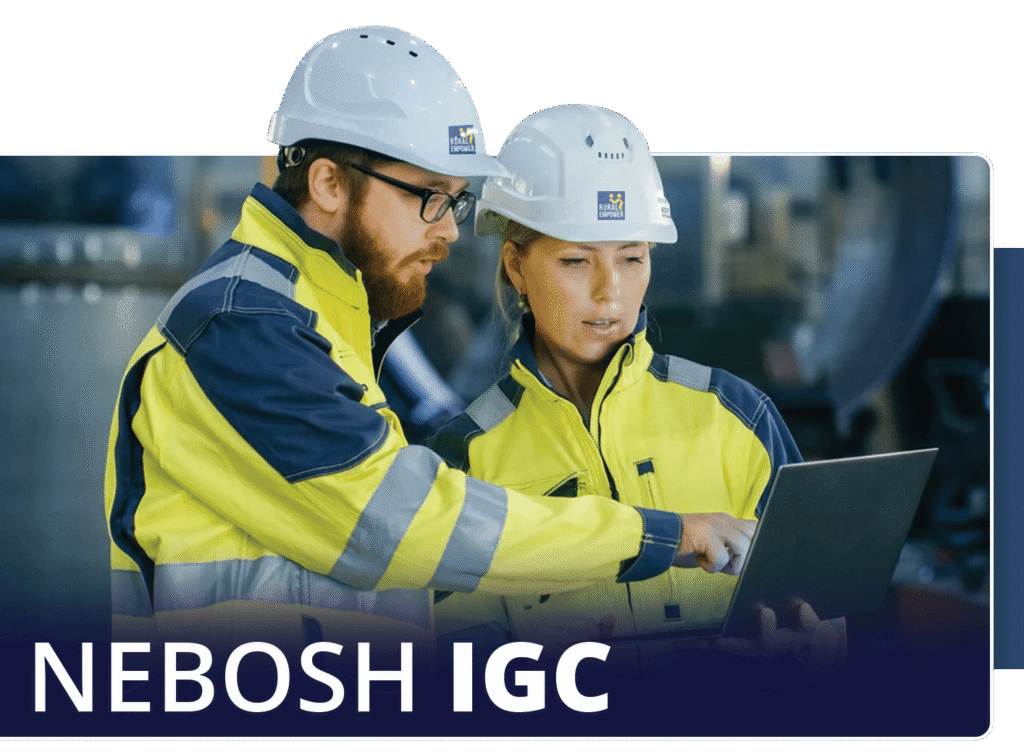
NEBOSH International General Certificate is one of the most widely respected health and safety qualifications in the world, currently held by around 90,000 people.
This NEBOSH international general certificate course is ideal if you are a manager, supervisor or employee representative based outside the UK.
Learning Methods
Virtual – The Virtual Classroom is our most exclusive offering. An exciting melting pot of the classroom and virtual learning to from the most flexible and learner centric learning format to date.
Online – Our most popular format gifts learners the control to learn and study on their devices when and where they wish. Learners will have access to the Wharton sustainable solution Track Smart and Exam Smart platforms to ensure their learning stays on track.
NEBOSH International General Certificate Course syllabus
NEBOSH International General Certificate Course syllabus
Unit IG1: Management of Health and Safety
Why we should manage workplace health and safety
• 1.1 Morals and money
• 1.2 Regulating health and safety
• 1.3 Who does what in organisations
How health and safety management systems work and what they look like
• 2.1 What they are and the benefits they bring
• 2.2 What good health and safety management systems look like
Managing risk – understanding people and processes
• 3.1 Health and safety culture
• 3.2 Improving health and safety culture
• 3.3 How human factors influence behaviour
• 3.4 Assessing risk • 3.5 Management of change
• 3.6 Safe systems of work
• 3.7 Permit-to-work systems
• 3.8 Emergency procedures
Health and safety monitoring and measuring
• 4.1 Active and reactive monitoring
• 4.2 Investigating incidents
• 4.3 Health and safety auditing
• 4.4 Review of health and safety performance
Physical and psychological health
• 5.1 Noise
• 5.2 Vibration
• 5.3 Radiation
• 5.4 Mental ill-health
• 5.5 Violence at work
• 5.6 Substance abuse at work
Musculoskeletal health
• 6.1 Work-related upper limb disorders
• 6.2 Manual handling
• 6.3 Load-handling equipment
Chemical and biological agents
• 7.1 Hazardous substances
• 7.2 Assessment of health risks
• 7.4 Control measures
• 7.5 Specific agents
General workplace issues
• 8.1 Health, welfare and work environment
• 8.2 Working at height
• 8.3 Safe working in confined spaces
• 8.4 Lone working
• 8.5 Slips and trips
• 8.6 Safe movement of people and vehicles
• 8.7 Work-related driving
Work equipment
• 9.1 General requirements
• 9.2 Hand-held tools
• 9.3 Machinery hazards
• 9.4 Control measures for machinery
Fire
• 10.1 Fire principles
• 10.2 Preventing fire and fire spread
• 10.3 Fire alarms and fire-fighting
• 10.4 Fire evacuation
Electricity
• 11.1 Hazards and risks
• 11.2 Control measures
Why we should manage workplace health and safety
• 1.1 Morals and money
• 1.2 Regulating health and safety
• 1.3 Who does what in organisations
How health and safety management systems work and what they look like
• 2.1 What they are and the benefits they bring
• 2.2 What good health and safety management systems look like
Managing risk – understanding people and processes
• 3.1 Health and safety culture
• 3.2 Improving health and safety culture
• 3.3 How human factors influence behaviour
• 3.4 Assessing risk • 3.5 Management of change
• 3.6 Safe systems of work
• 3.7 Permit-to-work systems
• 3.8 Emergency procedures
Health and safety monitoring and measuring
• 4.1 Active and reactive monitoring
• 4.2 Investigating incidents
• 4.3 Health and safety auditing
• 4.4 Review of health and safety performance
Physical and psychological health
• 5.1 Noise
• 5.2 Vibration
• 5.3 Radiation
• 5.4 Mental ill-health
• 5.5 Violence at work
• 5.6 Substance abuse at work
Musculoskeletal health
• 6.1 Work-related upper limb disorders
• 6.2 Manual handling
• 6.3 Load-handling equipment
Chemical and biological agents
• 7.1 Hazardous substances
• 7.2 Assessment of health risks
• 7.4 Control measures
• 7.5 Specific agents
General workplace issues
• 8.1 Health, welfare and work environment
• 8.2 Working at height
• 8.3 Safe working in confined spaces
• 8.4 Lone working
• 8.5 Slips and trips
• 8.6 Safe movement of people and vehicles
• 8.7 Work-related driving
Work equipment
• 9.1 General requirements
• 9.2 Hand-held tools
• 9.3 Machinery hazards
• 9.4 Control measures for machinery
Fire
• 10.1 Fire principles
• 10.2 Preventing fire and fire spread
• 10.3 Fire alarms and fire-fighting
• 10.4 Fire evacuation
Electricity
• 11.1 Hazards and risks
• 11.2 Control measures
Unit IG2: Risk Assessment
- Description of the organisation and methodology
- Risk assessment
- Priority actions with justifications
- Review, communicate and check
Request A Callback
Course assessments
NEBOSH has introduced open book exams for both the NEBOSH National and International General Certificates – units NG1, IG1, NGC1 and IGC1. This replaces in-person closed book exams and enables learners to sit their NEBOSH assessment in their own home or another safe and suitable location.
Assessment is a two-step process.
• An online open-book assessment
• A 3-hour practical risk assessment to demonstrate the knowledge
You need to pass both assessments to achieve your NEBOSH International General Certificate.